Lockouts · Woodstock
Seized & Jammed Lock Opening
It is the coldest morning of the winter and the key goes halfway into the side door and stops. There is frost on the face of the cylinder, and the door on the shaded side of the house has done this before.
Seized & Jammed Lock Opening
In plain words
A jammed lock looks like one problem from outside and is usually one of three inside. The cylinder itself may have seized, packed with grit, corrosion or old grease. The link between cylinder and bolt, the tailpiece or cam, may have broken, which is why a key can spin without doing anything. Or the lock may be healthy and the bolt simply pinned against the strike by a door that has moved. Seized and jammed lock opening starts by telling those apart, because the right answer for one would damage the hardware in another. Once the culprit is known, the door is opened and the cause is repaired.
How the visit goesThe key slides all the way in, exactly as it has for years, and then refuses to turn in either direction. Yesterday it needed a small wiggle. This morning it feels set in concrete, and pushing harder only makes the key flex.
Woodstock
How the visit goes
Which of the three families it belongs to
Every jammed lock falls into one of three groups, and sorting it is the whole diagnosis. A key that enters fully and will not turn points to the cylinder: grit, ice, corrosion, dried lubricant or a plug that has not returned to its neutral position with the shell. A key that turns freely and moves nothing points to the connection behind the cylinder, the tailpiece or cam, or to a broken hub in a mortise case. A key that works only when the door is pushed, pulled or lifted points past the lock entirely to the door and its strike. Each group has its own opening method and its own repair.
Stripping and rebuilding the cylinder on the bench
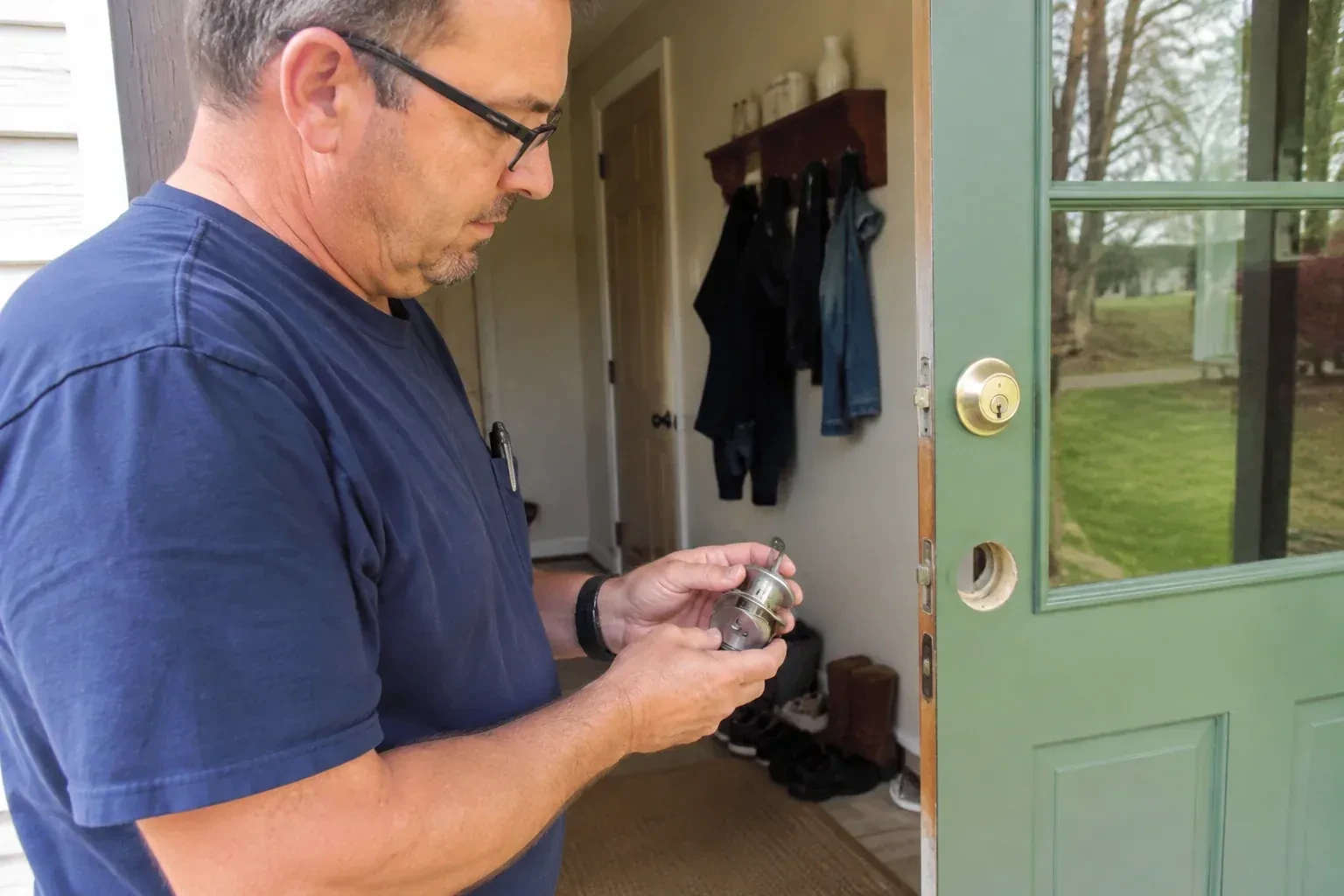
With access restored, a cylinder that seized gets a proper service. The locksmith removes it from the door, slides the plug out with a follower so the top pins and springs stay put, and lays out the pin stacks. Everything is cleaned, worn bottom pins and tired springs are replaced, and any burr on the plug is dressed. The plug is reassembled to the same combination so your existing keys keep working, then lubricated with the product that cylinder's maker specifies and cycled until it turns with a fingertip. If the key that jammed was worn, a fresh one is cut from the code rather than from that key.
For a business: a door the staff can rely on
On a commercial door the handover includes the people who use it. Whoever opens in the morning is shown how the lever, key and cylinder now behave, and the exit side is demonstrated so everyone knows the door opens from inside with one motion. If the mortise case was serviced, the parts that were replaced are named so a future locksmith knows what is in there. A note of which keys were tested and who holds them supports whatever key control the business runs. Spare keys are checked in the lock before they go back in the safe.
Seized & Jammed Lock Opening
In the van
- Lock de-icer
- Dry PTFE or graphite lock lubricant
- Key blanks and code cutter
- Replacement tailpiece or cam
- Plug follower and repinning kit
What affects the quote
Same fees day, night or weekend
1How many locks are affected
One seized side door is the simplest case; a front and back door that both drag, or a storefront with two leaves, adds hardware and time to the visit.
2Upgrades you choose on the spot
A keyhole cover, a storm door latch, a reinforced strike or a new deadbolt are optional extras some people add while the locksmith is there, each shown as its own line.
3Small parts behind the cylinder
Tailpieces, cams, springs, cylinder caps and pins are minor items, but each one used is named on the quote so you can see what went into the lock.
Seized & Jammed Lock Opening: questions
The thumb-turn is stuck from inside and we need that door to get out. What should we do?
Use another exit for now and call. From the inside the fault is usually a bolt pinned by the frame or a bent spindle, both of which the locksmith frees without damage. A main exit door should open from inside without a key or special knowledge, so the repair leaves the door doing exactly that, and if the hardware on it was the wrong type for an exit, a thumb-turn deadbolt is suggested.
Why is it always the shaded side of the building that seizes?
The face of a building that never sees direct sun stays colder and damper, so ice in a keyway lasts days longer there and condensation sits in the cylinder rather than drying off. Wind-driven rain and snow tend to hit the same face. Those doors deserve a keyhole cover, a storm door where one fits, and a lubricant check before the season turns, and they are often the first lock a locksmith asks about.
Should I spray something into the keyway while I wait?
Better not, unless it is a proper dry lock lubricant. Household oils, general penetrating sprays and hinge silicone thicken inside the cylinder and attract grit, so they buy a day and cost a service later. If the lock is frozen, a lock de-icer is fine; boiling water is not, since it refreezes deeper in. The most useful thing to do while waiting is to stop turning the key, so it does not bend or snap.
Lockout Services
- Business Lockout ServiceIt is ten to nine, three staff are on the sidewalk with their coffees, and the key that has opened…
- Broken Key ExtractionThat key had been bending a little for years, and you kept straightening it.
- Break-In Damage Lock RepairSomeone smashed the little window beside the door, reached in and turned the thumb-turn.
Seized & Jammed Lock Opening near you
Every service listed here has been done many times on doors in Woodstock, which is why each page can be specific about what gets checked, how the work is carried out, and what you are left with afterwards. Read the one that matches your situation, then reach out with any question the page did not answer.