Commercial · Woodstock
Commercial-Grade Lock Replacement
At closing time the hookbolt on the storefront door catches the keeper only on the second or third try, and one employee has started giving the door a shoulder to force it home.
Commercial-Grade Lock Replacement
In plain words
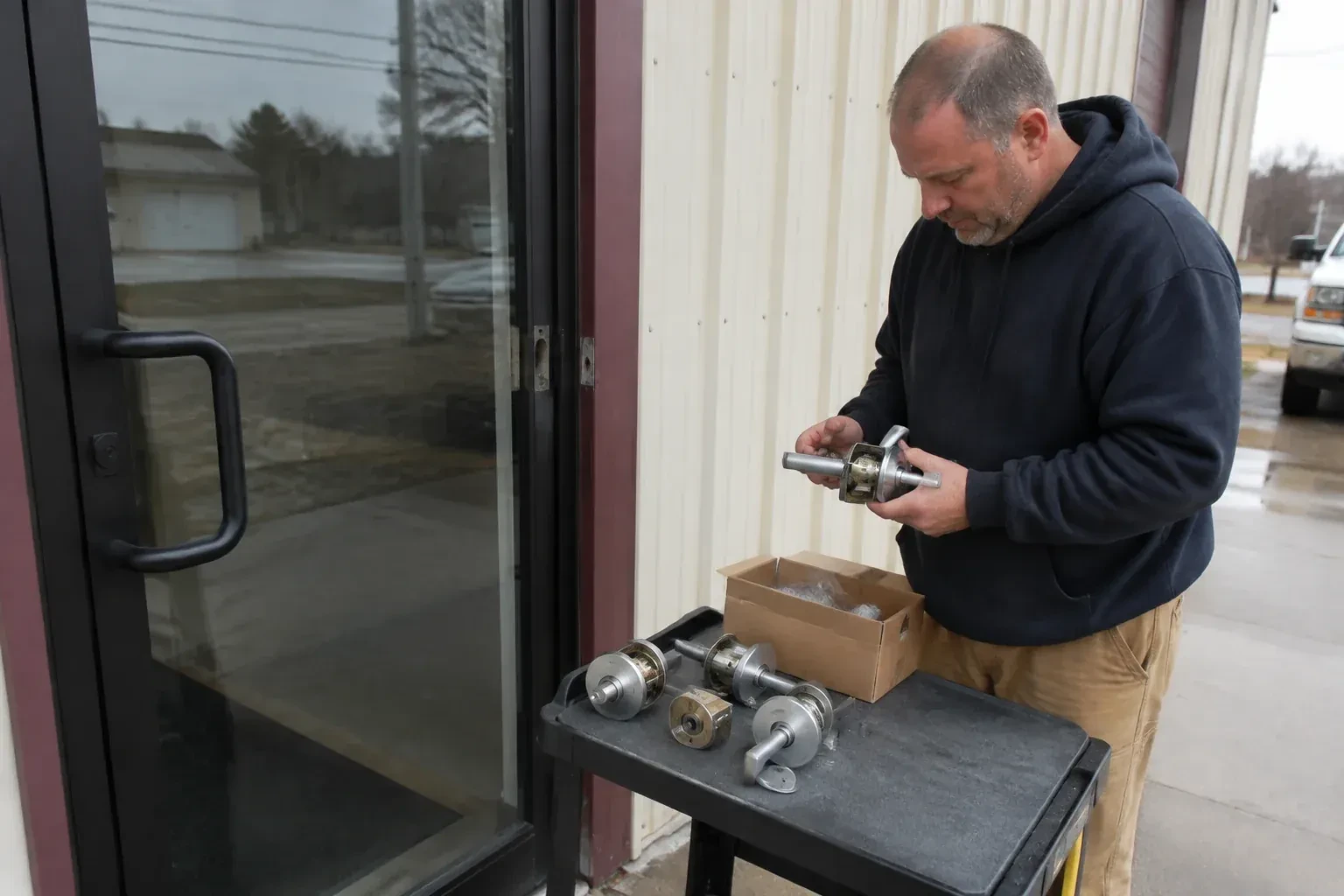
A business door rarely fails the same way a house door does, because it opens far more often and often has to satisfy a fire or egress rule a home door never faces. Replacement starts by identifying what the opening actually is: a mortise-prepped steel door, a narrow-stile aluminum storefront, a fire-rated door that needs listed hardware, or an exit serving enough people that code calls for panic-style release. The locksmith fits hardware built for that specific opening, connects it correctly to any electric strike or access-control wiring already present, and hands over keys cut and logged to the business's own system.
How the visit goesHead office wants every branch keyed alike under one system, and half the locations are still running whatever lockset the original contractor happened to install years ago.
Woodstock
How the visit goes
Checking how the current lock fits the business's key system
Every commercial building runs some kind of keying logic, even an informal one, and the locksmith maps it before touching hardware: is this cylinder on the same key as other doors, does it belong to a master or grand-master system, is it a standard keyway or a restricted one that only a specific supplier can cut? Getting this picture first means the new hardware can be ordered to slot into that structure, onto a fresh structure the business wants instead, or left standing alone if that is genuinely what is wanted.
Fitting the new lock body or lockset
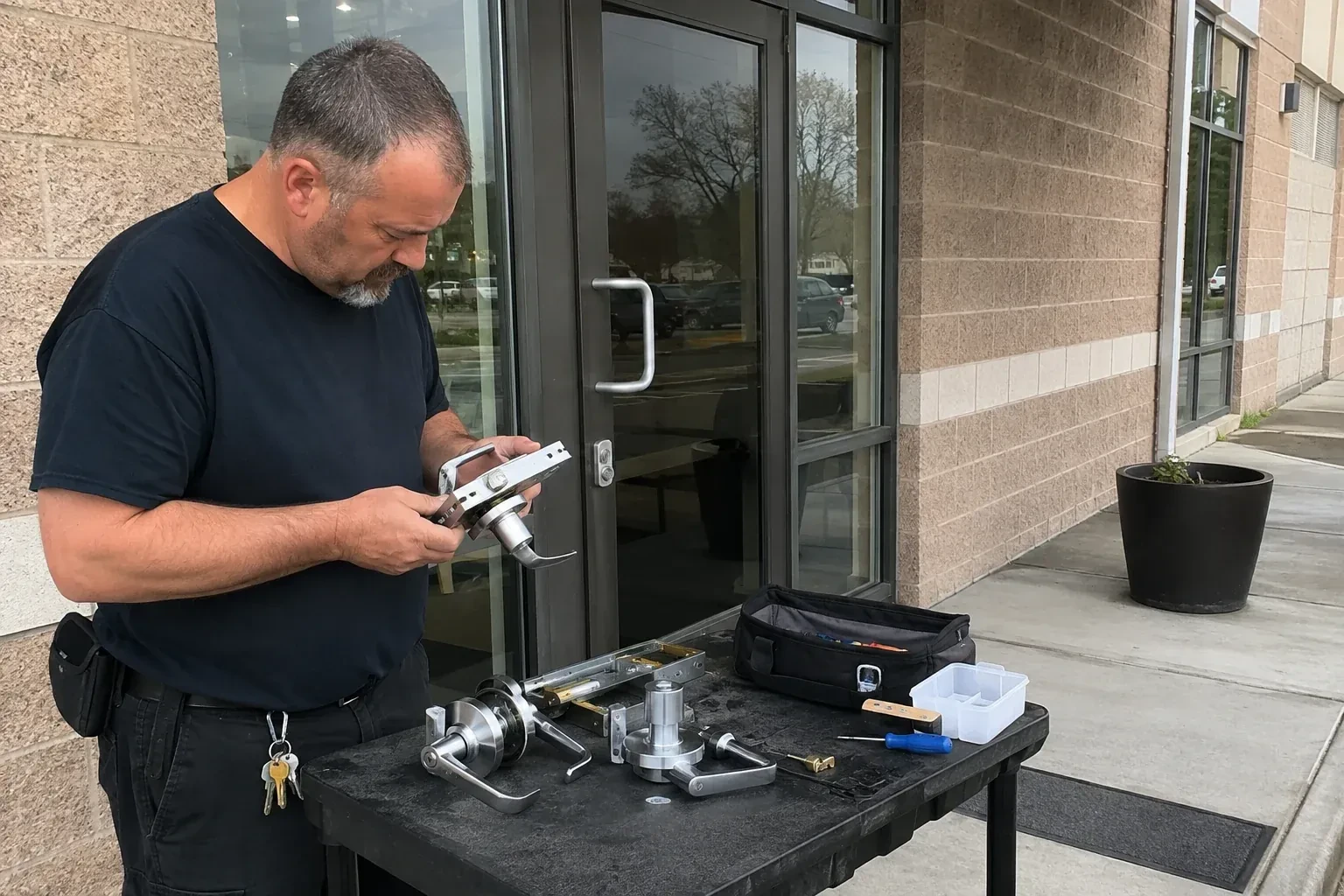
The new hardware is installed into the existing prep, with the lock body or lockset, strike and any reinforcing plate seated so the door closes without binding. On a narrow-stile storefront door, the hookbolt or deadlatch is aligned so it engages the keeper across its full travel rather than catching on one edge. On a mortise-prepped door, the case is fitted so the trim sits flush and the spindle and cylinder line up with the existing holes cut for them.
One key system instead of a patchwork
Where the visit brought hardware onto a shared master or interchangeable-core system, the business now has one coherent structure instead of a different cylinder on every door. A master key opens what it is supposed to, sub-master and change keys are limited to their own doors, and the key-control log reflects exactly who was issued what. The next time a lock needs attention, whoever handles it can read that log rather than guessing at what system, if any, the previous hardware belonged to.
Commercial-Grade Lock Replacement
In the van
- Interchangeable-core cylinder
- Mortise prep and installation tools
- Restricted keyway cylinder
- Listed panic or exit hardware
- Strike plates and keepers
What affects the quote
Same fees day, night or weekend
1Panic or exit hardware
Listed exit devices cost more than a standard lockset and are quoted per opening, since a route requiring this hardware often needs it consistently across more than one door along that path.
2Number of keys cut and issued
Keys are counted individually into the quote. A small office needing a handful of keys is a smaller line item than a multi-shift operation issuing keys to a large staff roster.
3Type of hardware the door takes
A mortise lock body, a heavy cylindrical lockset and a narrow-stile lock or hookbolt are priced differently as hardware and take different amounts of labour to fit, so the quote follows what the door's own construction requires.
Commercial-Grade Lock Replacement: questions
What makes a lock 'commercial-grade' rather than a residential one?
Commercial-grade hardware is built for far higher cycle counts and rougher daily handling than a home lock ever sees: heavier internal components, a lock body and strike designed to take repeated forceful use, and often a rating tied to an industry grading system that measures cycles and impact resistance. A residential deadbolt fitted to a busy business door tends to wear out well before its time because it was never built for that volume of use.
Can you install a restricted or patented keyway?
Yes. A restricted keyway limits duplication to keys cut through the manufacturer or an authorized distributor rather than at an ordinary hardware counter, though the exact registration and proof-of-entitlement steps vary by system; a patent-protected keyway adds a further, legally backed layer of control on top of that. This is a common step for a business tightening key control after a lost key or staff turnover.
Can you replace just the cylinder instead of the whole lock body?
Often, yes, particularly with an interchangeable-core system where the core is designed to be swapped without removing the lock body from the door. Where the lock body itself is worn, damaged or of a grade that no longer suits the door's traffic, replacing the cylinder alone would leave the underlying problem in place, so the locksmith says which option actually fits the situation found.
Commercial Locks
- Master Key System DesignAfter a busy shift the manager counts the keys coming back in and loses track of who still has one.
- Access Control InstallationSomething went missing from the storeroom over a weekend, and when you ask who was in the building…
- Panic & Exit HardwareA padlock went on the stockroom's back door years ago for security and nobody has thought about it…
Commercial-Grade Lock Replacement near you
Every service listed here has been done many times on doors in Woodstock, which is why each page can be specific about what gets checked, how the work is carried out, and what you are left with afterwards. Read the one that matches your situation, then reach out with any question the page did not answer.