Lockouts · Woodstock
Lost Keys — Same-Visit Rekey in Woodstock
The lawyer's envelope held two keys for the new house. The previous owners mention a cleaner, a dog walker and a brother who checked on the place, and the builder's paperwork shows six were cut originally.
Lost Keys — Same-Visit Rekey
In plain words
How much a lost key matters depends on what was lost with it. A ring that dropped into a lake on a canoe trip tells nobody where it fits, so the rekey is a tidy precaution. A ring taken with a wallet or bag that carried your address is a different story: someone now holds both the key and the door it opens, and the rekey comes first. The locksmith asks about this on the phone, says plainly which situation you are in, and schedules the visit accordingly. The work is the same either way, and so is the outcome: a key nobody else has.
How the visit goesYou were shovelling the driveway after dark and the ring must have slid out of your coat pocket somewhere under a metre of snow. You have raked the whole bank with a flashlight. It will turn up in April, and you would rather not wait.
Woodstock
How the visit goes
Can all these doors share one key?
With the cylinders read, the locksmith can say whether the whole property can live on one key. Cylinders from the same keyway family accept the same blank, so they can be pinned to the same combination. Where the front door is one family and the garage entry another, the choice is to keep two keys or swap one cylinder for a compatible one during the visit. Five-pin and six-pin cylinders, and homeowner-rekeyable types, each have their own limits on what they can be matched to. A minute of comparing keyways before the work begins is what makes a single ring possible afterwards rather than a near miss.
Testing every key in every lock before leaving
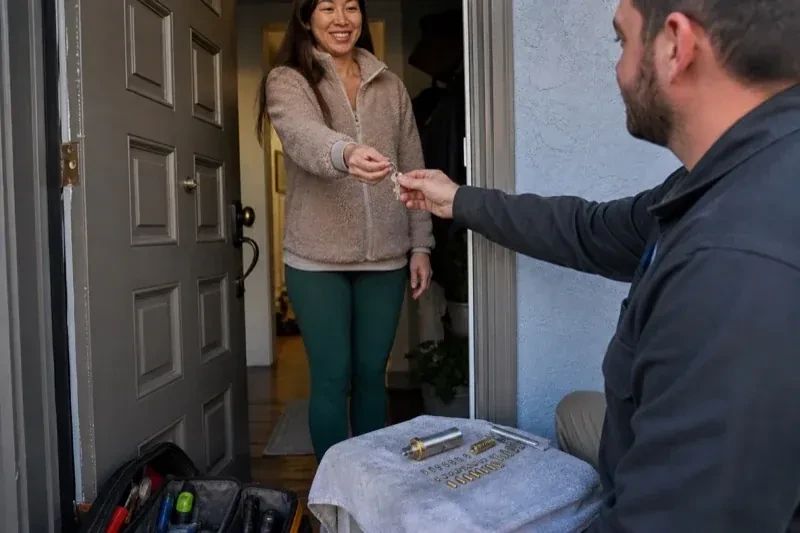
The last part of the work is deliberate repetition. Each new key is tried in each cylinder it should open, with the door open and again with it closed and bolted, so a pin that feels fine on the bench is proven on the door. The old key is tried too and shown turning nothing. Cylinders that were dry or gritty get the lubricant their maker specifies, a puff of graphite, PTFE or a specified liquid product, and a few cycles to spread it. Screws are checked snug, covers seated, and the pile of old keys and any swapped cylinders is handed to you or taken away as you prefer. Only then is the key count confirmed and written down.
The old key is now a piece of brass
Whatever became of the lost key, it stopped mattering the moment the last cylinder went back on the door. It still slides into the keyway, because the keyway did not change, but the pins inside no longer line up with its cuts, so it turns nothing. Whoever finds it in a snowbank in April, or already has it in a drawer, holds a shape that fits your lock and does nothing to it. That is the whole purpose of the visit, and it is worth pausing on: the worry that started the day has a definite ending, and you can watch it demonstrated with the old key in your own hand.
Lost Keys — Same-Visit Rekey
In the van
- Code key machine
- Rekeying pin kit
- Key blanks in common keyways
- Cylinder retaining-clip and cap tools
- Rekeyable-cylinder reset tool
What affects the quote
Same fees day, night or weekend
1Restricted or high-security keyways
Patented and high-security cylinders carry more parts, need dedicated pin kits and issue keys through authorised channels. Rekeying them takes longer and the blanks cost more than common residential ones.
2The kind of lock each cylinder lives in
Knob, lever, deadbolt, mortise and rim cylinders come out of the door differently and take different care to refit. A mortise cylinder in a century home is more involved than a builder-grade knob.
3Paperwork for a landlord or building
Where a landlord, condominium or lease requires a written record of the lock change and key count, preparing that note and any key register update is a small named item.
Lost Keys — Same-Visit Rekey: questions
I live in a condominium. Which locks are mine to rekey?
Your suite door is generally the one you can act on, and it may sit on a building master system, so the locksmith plans the rekey so the master still operates while the old change key stops working. Lobby doors, the parking gate, amenity rooms and the mailroom belong to the corporation; report a lost fob or key for those to the property manager, who deactivates or reissues it. The locksmith can help sort which is which.
Can all my doors work on one key afterwards?
Usually, yes. Cylinders that share a keyway family accept the same blank, so they can be pinned to one combination during the rekey. The front door, back door, garage entry and a gate padlock of the same family become a single key. Where a door uses a different family, the locksmith can swap its cylinder for a compatible one in the same visit, or you can choose to keep two keys for that door.
My lock is the homeowner-rekeyable type but the working key is lost. Can it still be reset?
Yes. Those cylinders let an owner change the key with a small learn tool, but only while a working key is in hand. Without one, a design such as Kwikset SmartKey is removed and placed in its own reset fixture, returning it to a blank state; other cylinder types are rekeyed by their own method instead. A new key is then set and the lock goes back on. It is a few extra minutes rather than a replacement.
Lockout Services
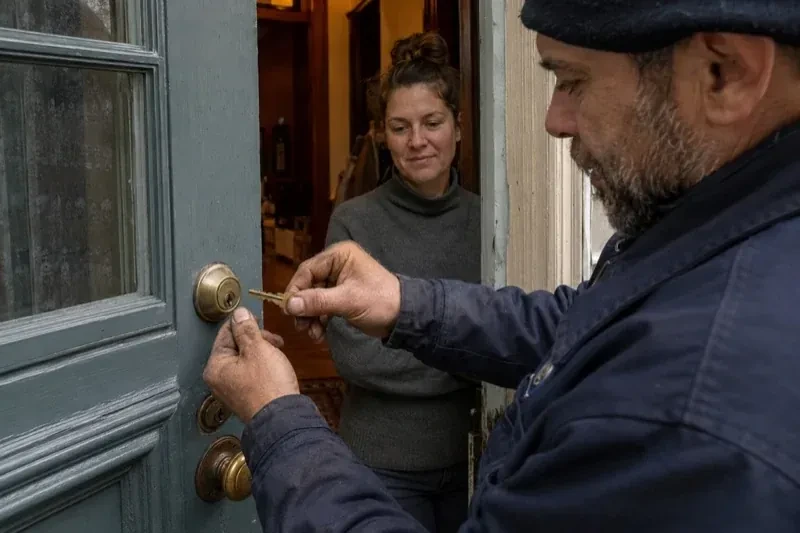
- Business Lockout ServiceIt is ten to nine, three staff are on the sidewalk with their coffees, and the key that has opened…
- Broken Key ExtractionThat key had been bending a little for years, and you kept straightening it.
- Break-In Damage Lock RepairSomeone smashed the little window beside the door, reached in and turned the thumb-turn.
Lost Keys — Same-Visit Rekey near you
Every service listed here has been done many times on doors in Woodstock, which is why each page can be specific about what gets checked, how the work is carried out, and what you are left with afterwards. Read the one that matches your situation, then reach out with any question the page did not answer.